
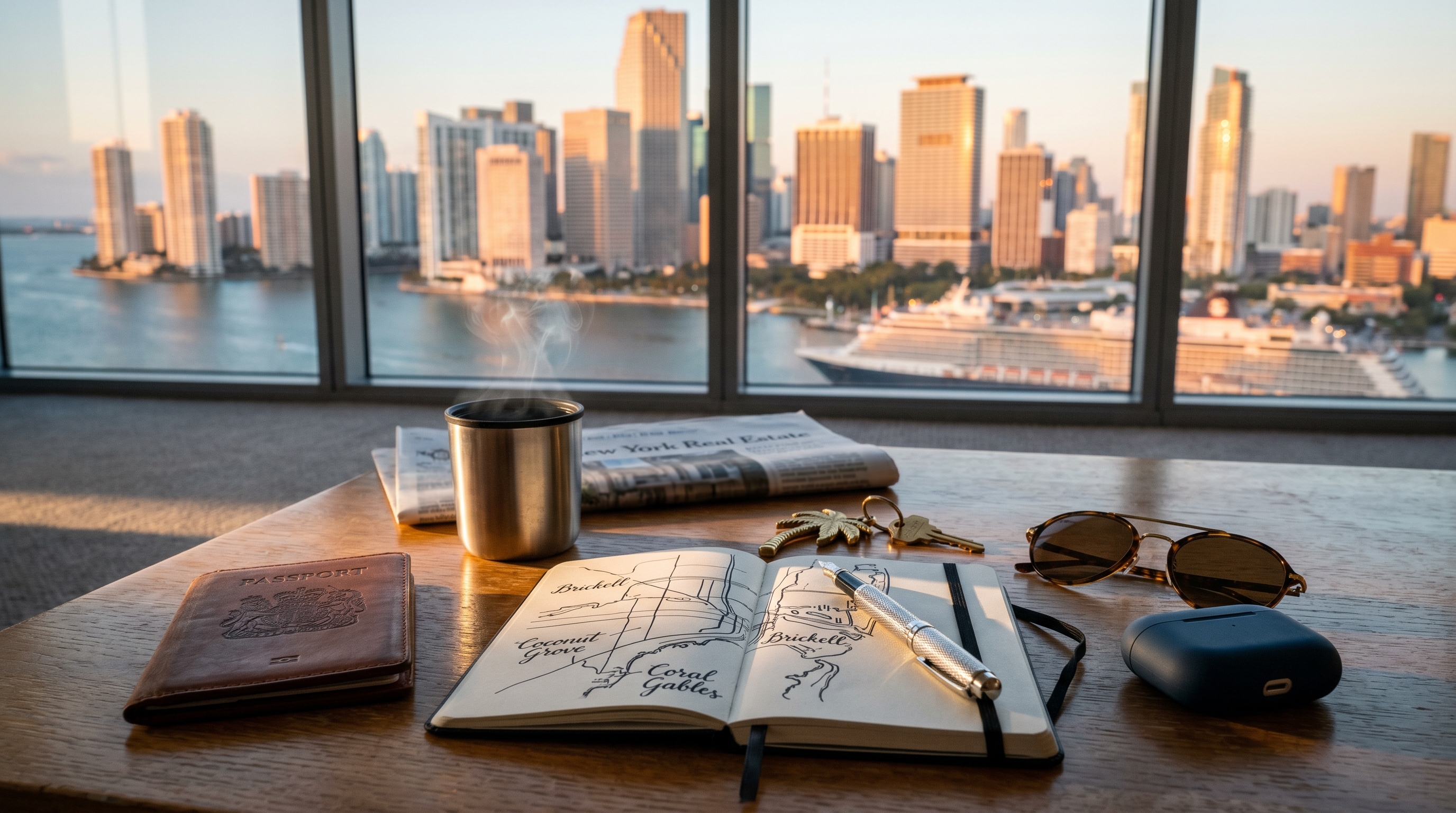
I work with New York clients every week. They come down on a Thursday-to-Sunday "scouting trip" with a list of three neighborhoods, two private schools, and a number in their head. By Sunday brunch at Joe's Stone Crab, the number has gone up, the list of neighborhoods has changed, and they're asking me the same five questions every transplant asks.
This is that conversation, written down. If you're in New York reading this on a 7am subway, save it. By the time you actually pull the trigger on a move, half the data here will be outdated — but the framework will still be right.
If you're new to my blog, my piece "Miami Real Estate Pulse — May 2026: What the Spring Surge Means for Buyers, Sellers, and Investors" pairs well with this one — it gives you the macro context behind the numbers below.
The Tax Math Is Not Just Marketing. It's Real.
Let's start where most New Yorkers actually start, which is the math.
New York State income tax: 6.85% on most earners over $215K, climbing to 10.9% over $25M income.
New York City income tax: 3.078% to 3.876% on top of state.
Florida income tax: 0%.
Take a New York City household earning $1M of W-2 plus business income. They're paying roughly $108K to NY State + $38K to NYC = $146K of state and local income tax. Move that exact household to Miami, same income, and that $146K stays in their pocket. Even a $500K household typically clears $50K-$60K of annual savings.
Property taxes are higher in Florida than people expect (Miami-Dade effective rate around 1.0%-1.2%), but homestead exemption + SOH (Save Our Homes) caps cap your assessed value growth at 3% per year once you claim your Florida residence. Over 10 years that's enormous.
The Cost of Living Reality Check
Here's where I correct the New York myth. Miami is not cheap. People assume "south Florida = affordable" because their parents moved to Boca in 2007. That Miami doesn't exist anymore.
Miami Market Snapshot — May 2026:
- Median sale price in Miami-Dade: $578,000, up 1.21% YoY
- Median sale price in Brickell condos: $735,000
- Median sale price in Coconut Grove single-family: $1.85M
- Median sale price in Coral Gables single-family: $2.4M
- Median condo rent in Brickell: $4,150/month
- Spec mansion market in Miami Beach and Indian Creek is reviving fast — $25M+ tear-downs are back in 2026
What you'll find: A 2-bedroom Brickell condo with a view that would be $9K-$12K in Tribeca is $4K-$6K in Miami. A Coconut Grove or Coral Gables single-family house comparable to a Brooklyn brownstone runs $1.8M-$3M instead of $4M-$6M. Private school in Miami is roughly 30-50% less than equivalent Manhattan tier. Restaurants and groceries are about NYC parity. Gas and electricity are higher. Insurance — homeowners, flood, hurricane — is where Miami punishes you. Budget $8K-$25K per year for a single-family home depending on age, elevation, and zone.
Which Miami Neighborhood Matches Which Version of NY Life?
The most common mistake New Yorkers make: trying to recreate Manhattan in Miami. The two cities don't translate one-for-one. Here's the rough map:
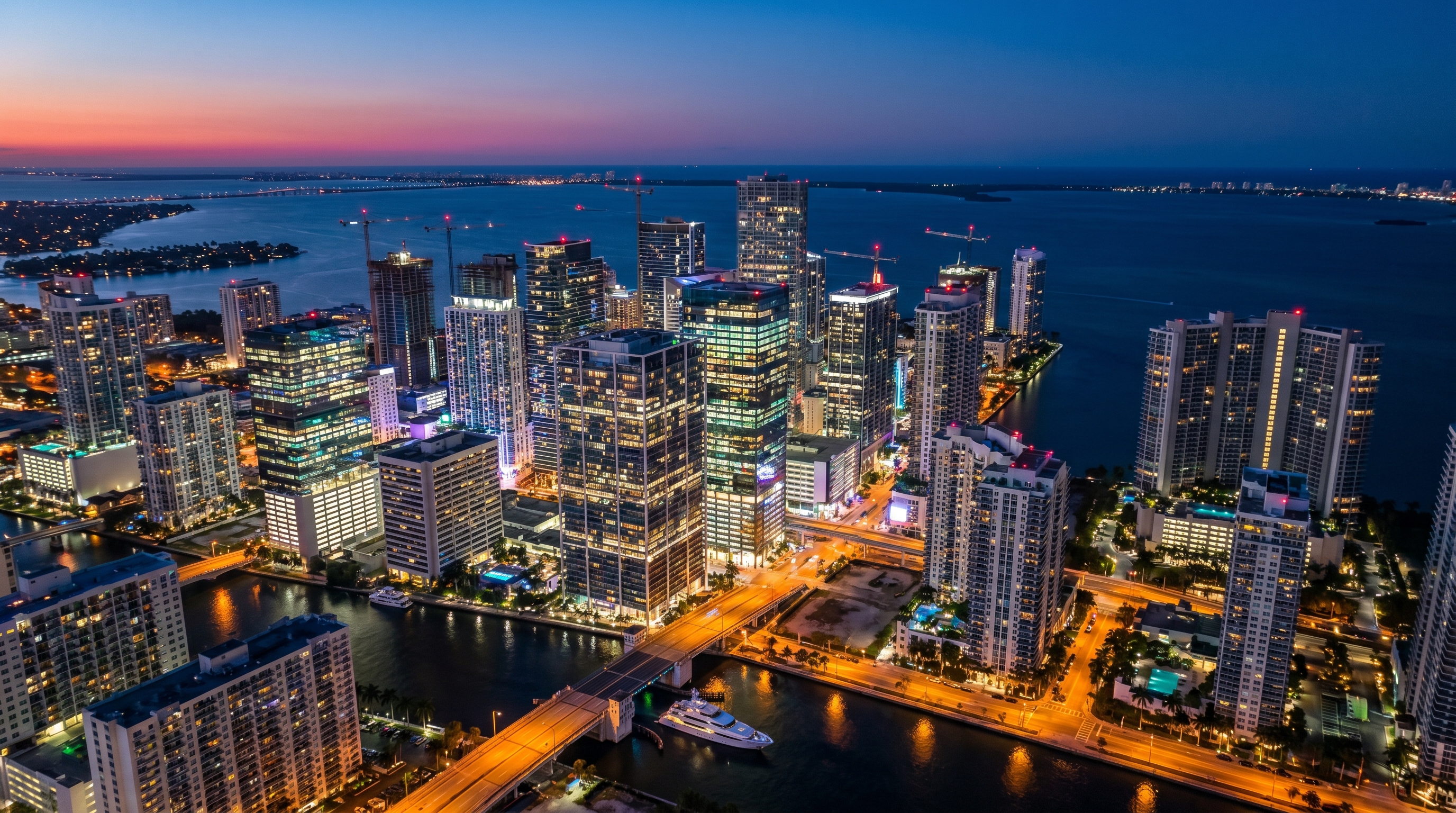
Brickell. The Manhattan analog. Vertical, walkable, financial. If you live in the Financial District, Midtown East, or Hudson Yards — Brickell is your move. Restaurants downstairs, gym in the building, work from a co-working space three blocks away. Best for couples without kids, single professionals, and business owners who want to be where the deals happen. Read my "Brickell vs Edgewater: The Honest Guide" before you commit.
Edgewater. The Williamsburg/LIC analog. New towers, water views, slightly less polished than Brickell, better value per square foot. Newer construction, often investor-friendly, walkable to Wynwood and the Design District. Great for couples and young families willing to live in a building.
Coconut Grove. The Park Slope analog. Mature trees, real community, A-rated public schools, walkable village center, marina culture. Best for families with kids. My piece "Living in Coconut Grove" goes deeper.
Coral Gables. The Greenwich CT analog. Wide streets, Mediterranean architecture, Country Club, Venetian Pool, top private schools (Gulliver, Ransom Everglades nearby). Big lots. Tree canopy. Where lawyers, doctors, and second-generation Latin American business families settle. Heavier price point.
Pinecrest/Palmetto Bay. The Westchester analog. Suburban-feeling, top public schools (Palmetto, Pinecrest), 25-minute commute to Brickell off-peak. Big yards, pools, less walkability.
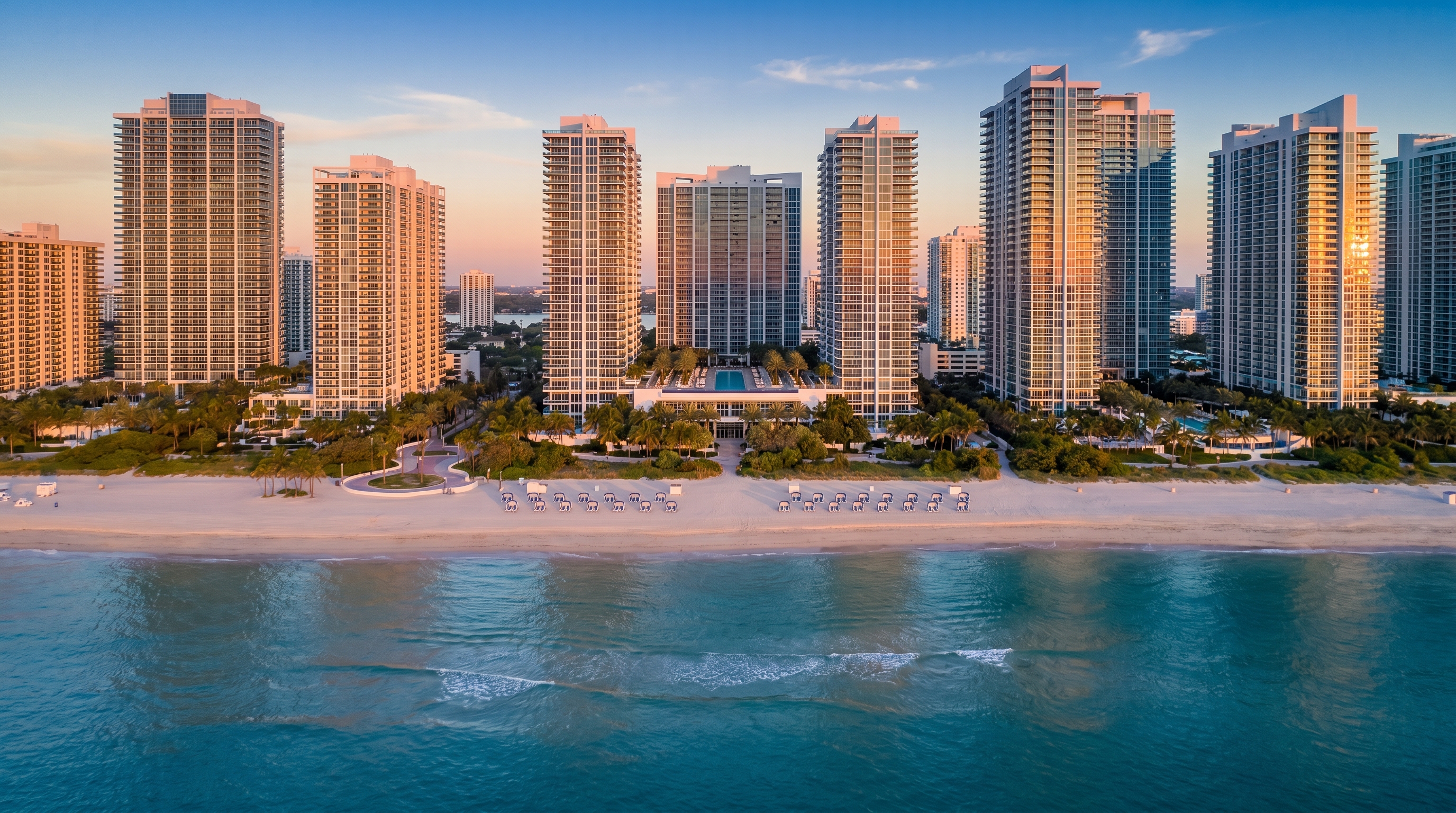
The Beaches (South Beach, Mid-Beach, Sunny Isles). The Hamptons-meets-Miami analog. Most NYers fantasize about living on the beach and last about 18 months before moving inland. Sand, salt, tourists, and bridge traffic wear thin. Better as a second-home strategy than a primary move.
The "Establishing Florida Residency" Game
If your goal is the tax savings, you cannot half-move. New York is aggressive about auditing former residents. You need to:
1. File a Declaration of Domicile in Miami-Dade.
2. Get a Florida driver's license within 30 days. Surrender the NY one.
3. Register to vote in Florida.
4. Re-title your vehicles in Florida.
5. Update every account, professional license, club membership, and subscription to your Florida address.
6. Spend less than 183 days in New York annually. Track every day. Phone records, credit card receipts, EZ-Pass logs — all become evidence in a residency audit.
7. Apply for the homestead exemption on your Florida primary residence by March 1 of the year following purchase.
8. If you keep a NY apartment, downsize it and document that it is a "secondary" property, not a primary.
I've watched two clients lose seven-figure tax-savings claims because they kept "popping back to the city for work" without documentation. The audits are real. The paper trail is your defense.
The Schools Conversation
Public schools: Miami-Dade has more A-rated public schools than New Yorkers expect, but they cluster in specific zip codes. The strongest belts are Coral Gables Senior High zone, Pinecrest/Palmetto, Coconut Grove Elementary, and parts of South Miami. Outside those zones, you're typically looking at private.
Private schools: Tier-one options include Ransom Everglades, Gulliver Prep, Carrollton, Riviera Day, Belen Jesuit, Saint Thomas Episcopal, and Cushman. Tuition runs $35K-$60K/year — meaningfully less than equivalent Manhattan tier-one. Waitlists for K-1 entry are 12-24 months, so start the application process before you start the home search.
The Lifestyle Recalibration
Things New Yorkers love about Miami once they actually move:
- Outdoor life year-round. You will walk, bike, and boat more in a Miami month than a NY year.
- 35-minute door-to-door from home to beach.
- Restaurants without the 9pm reservation grind.
- Genuinely diverse, multilingual environment.
Things New Yorkers struggle with:
- Driving culture. Miami is not walkable outside specific neighborhoods.
- Summer (June-September) is intense. Plan to be in NY, the Hamptons, or Europe for July and August.
- Less spontaneous "run downstairs for a slice" street culture.
- Service expectations require recalibration — Miami operates on its own timing.
Common Six-Figure Mistakes I See
1. Buying before establishing residency. You miss homestead and SOH caps for a year.
2. Picking the wrong neighborhood because of a single weekend's impression.
3. Underestimating insurance and HOA costs in condos. Some Brickell buildings have HOAs of $1,500-$3,500/month.
4. Not reading the 40-year recertification status of an older beach condo. This can be a five- to seven-figure surprise.
5. Skipping a buyer's agent and using the listing agent. Different ballgame than NYC dual-agency norms.
Frequently Asked Questions
Q: How long does it take to relocate from New York to Miami?
A: From decision to closing is typically 90-150 days. Add another 30-90 days for residency paper trail to fully settle (DMV, voter registration, homestead application timing).
Q: Is it better to rent first or buy immediately when moving from NY to Miami?
A: For most clients, I recommend a 6-12 month rental in your top neighborhood, then buy. Miami has microclimates of price and lifestyle that don't show up on Zillow. Renting first prevents the six-figure mistake of buying in the wrong zip code.
Q: What's the real tax savings for a New York family moving to Miami?
A: A NYC household earning $750K typically saves $80K-$95K per year in state and city income tax. A $1.5M household saves $160K-$200K. Add property tax cap benefits over a decade and the cumulative number is life-changing.
Q: Can I keep my New York apartment after moving to Miami?
A: Yes, but it must clearly become a "secondary" property and you must track your days carefully — under 183 in New York annually. Many of my clients keep a smaller pied-à-terre while making Miami their declared primary.
Ready to Move?
If you're in New York and Miami is starting to feel less like a fantasy and more like a plan, let's talk. I work with relocation buyers every week and I know the neighborhoods, the schools, the buildings, and the buildings to avoid. Whether you're buying, selling, or investing — I've got you.