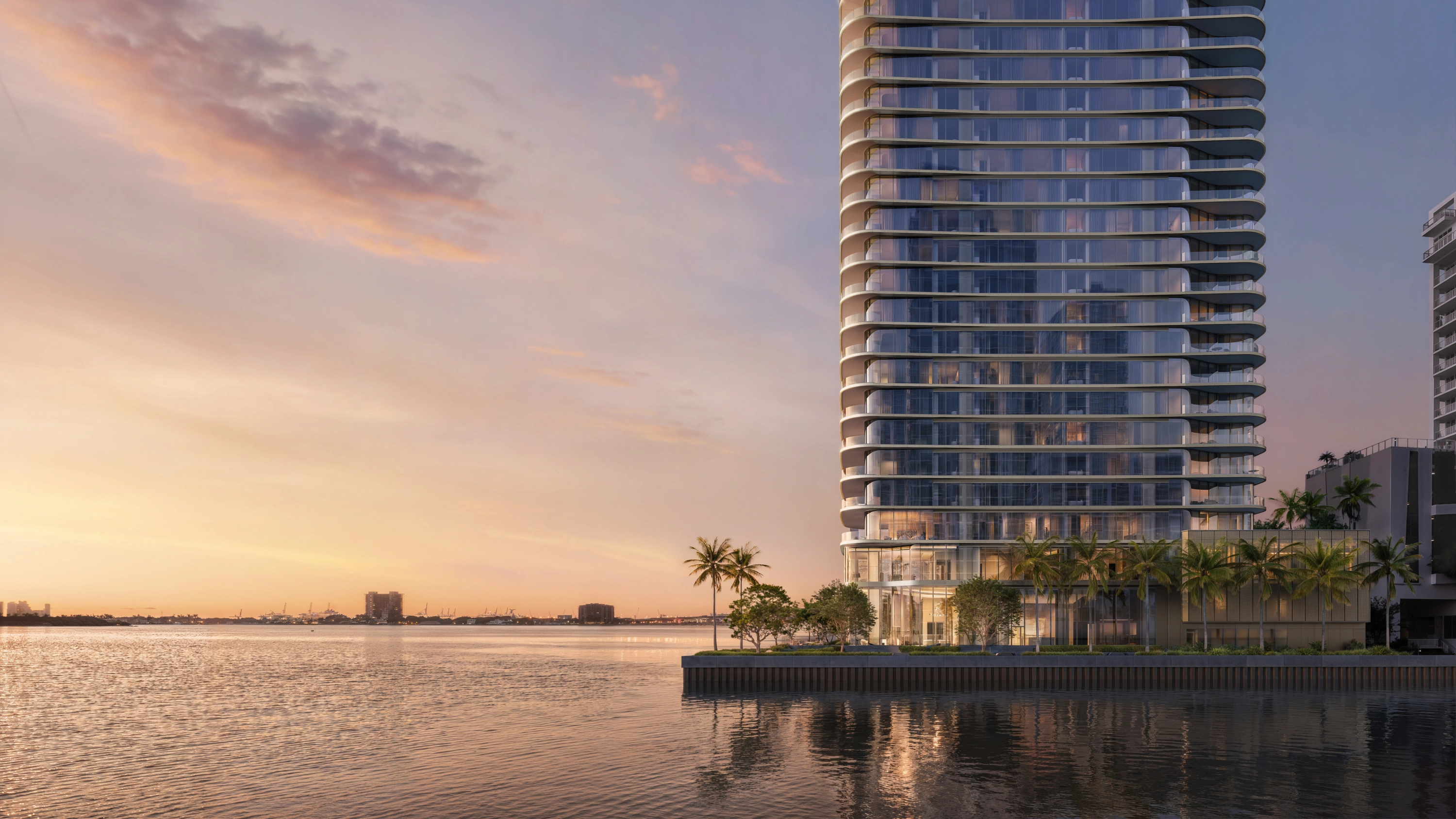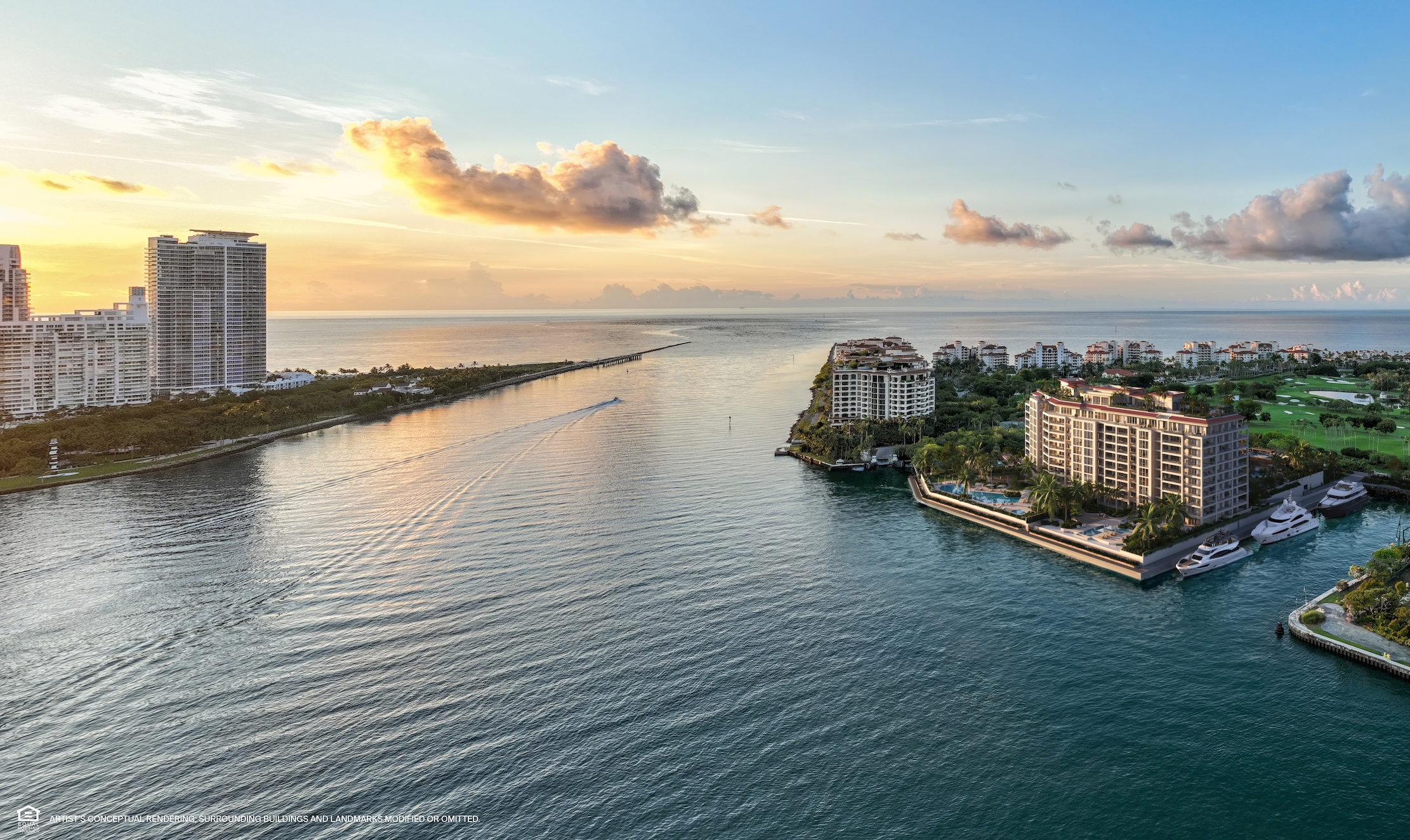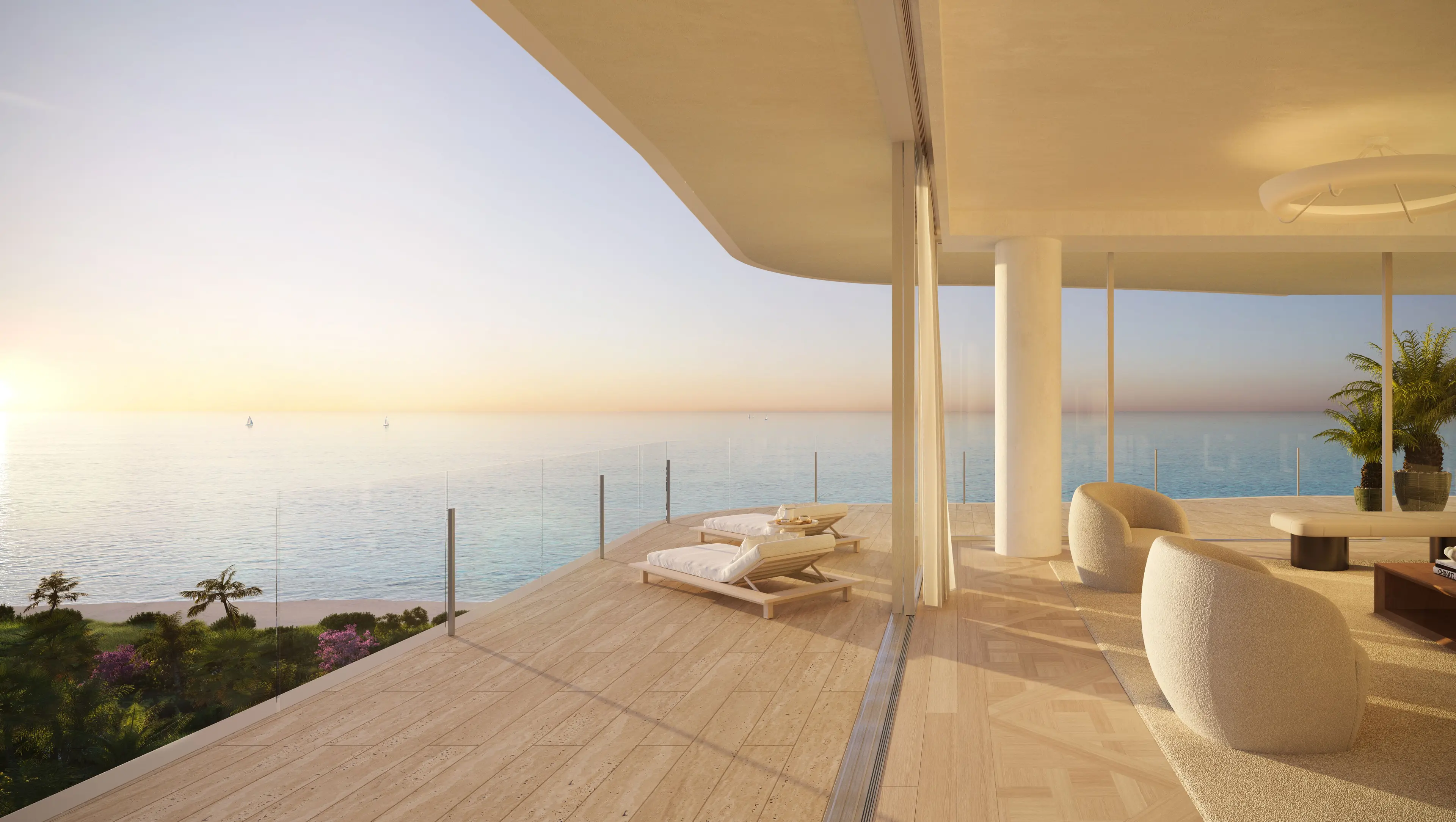

When my clients ask about pre-construction in the eight-figure tier, the conversation usually starts with three buildings: Faena Residences, the Surf Club, and Continuum at Hibiscus Island. Now there's a fourth name in that conversation — The Perigon Miami Beach.
What separates The Perigon from the rest of Miami's branded oceanfront product isn't a hospitality label or a fashion house. It's that the building was designed by OMA, Rem Koolhaas's firm — the same office responsible for Seattle's Central Library, Beijing's CCTV Headquarters, and Manhattan's Prada flagship. This is genuine architectural pedigree, not licensed marketing.
For a specific buyer profile — the design-literate ultra-high-net-worth client who already owns trophy product elsewhere — The Perigon is one of the most interesting pre-construction plays in Miami right now. Let me walk you through it.
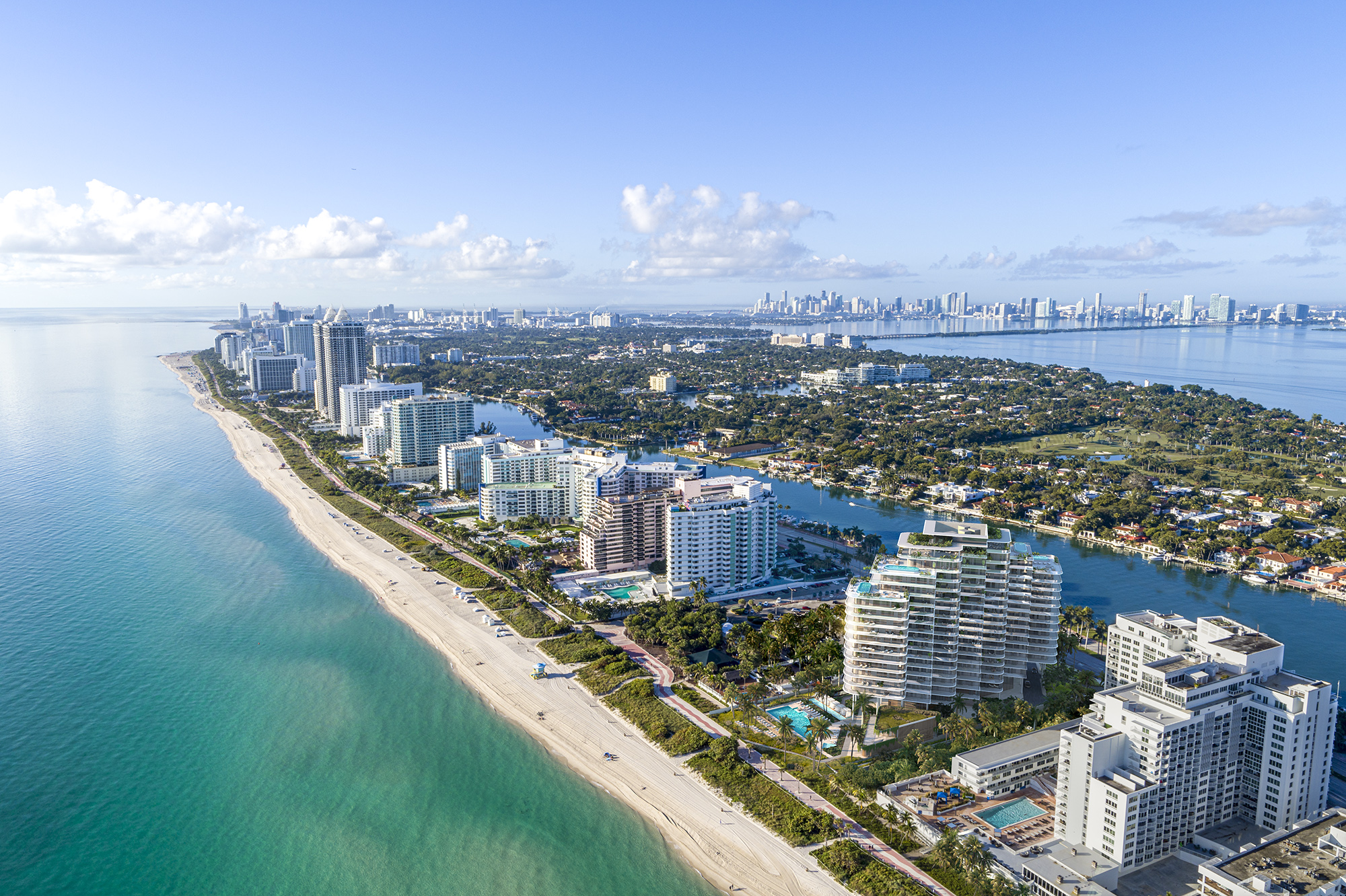
The Building: 5333 Collins Avenue, Mid-Beach
The Perigon sits in Mid-Beach, the stretch of oceanfront between South Beach and Bal Harbour that has quietly become Miami's most exclusive section of barrier island. Faena Residences is two blocks away. Edition Miami Beach is across the street. This is the corridor that attracts buyers who specifically don't want the South Beach scene but do want oceanfront and walkability.
The development team:
- Developer: 5333 Collins Acquisitions, LP
- Architect: OMA (Office of Metropolitan Architecture), led by Rem Koolhaas
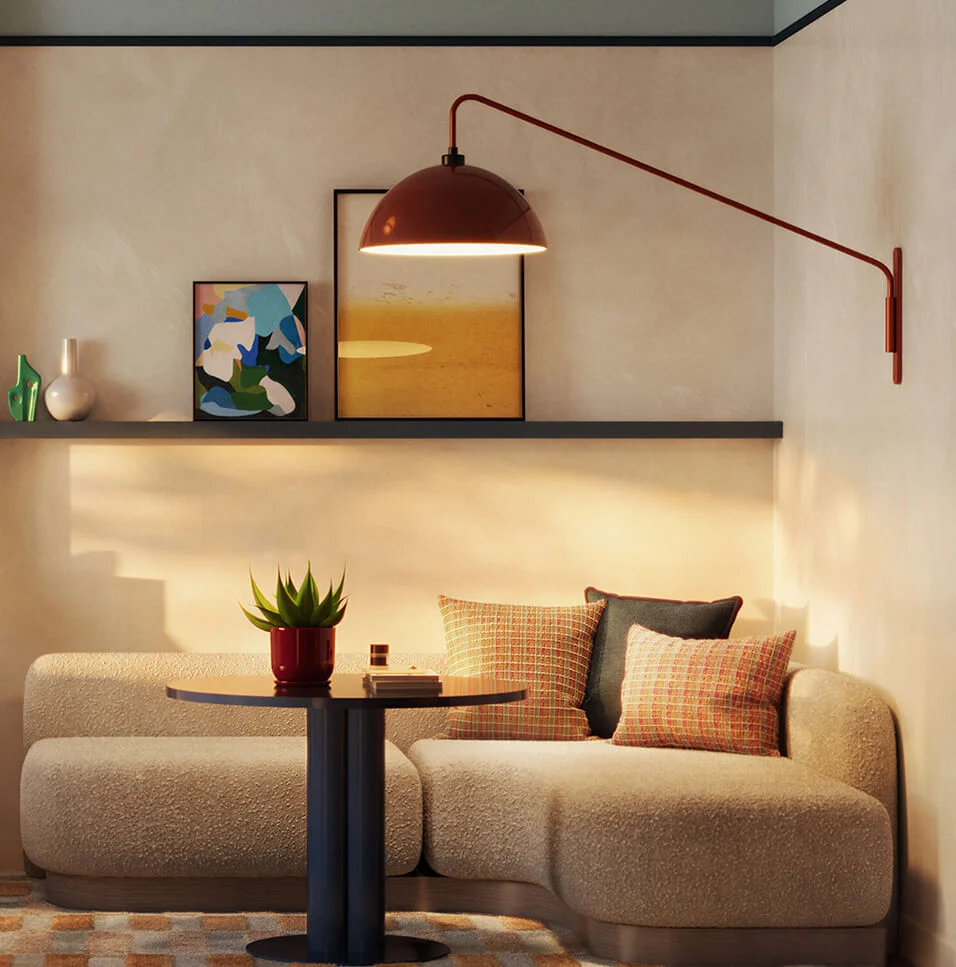
- Interior Design: Tara Bernerd & Partners
Bernerd is a top-tier hospitality and residential interior designer (Belmond Cap Juluca, Four Seasons London, Sixty SoHo). Pairing her with OMA produces a building where the exterior architectural concept actually translates into livable, sophisticated interiors — a rare alignment.
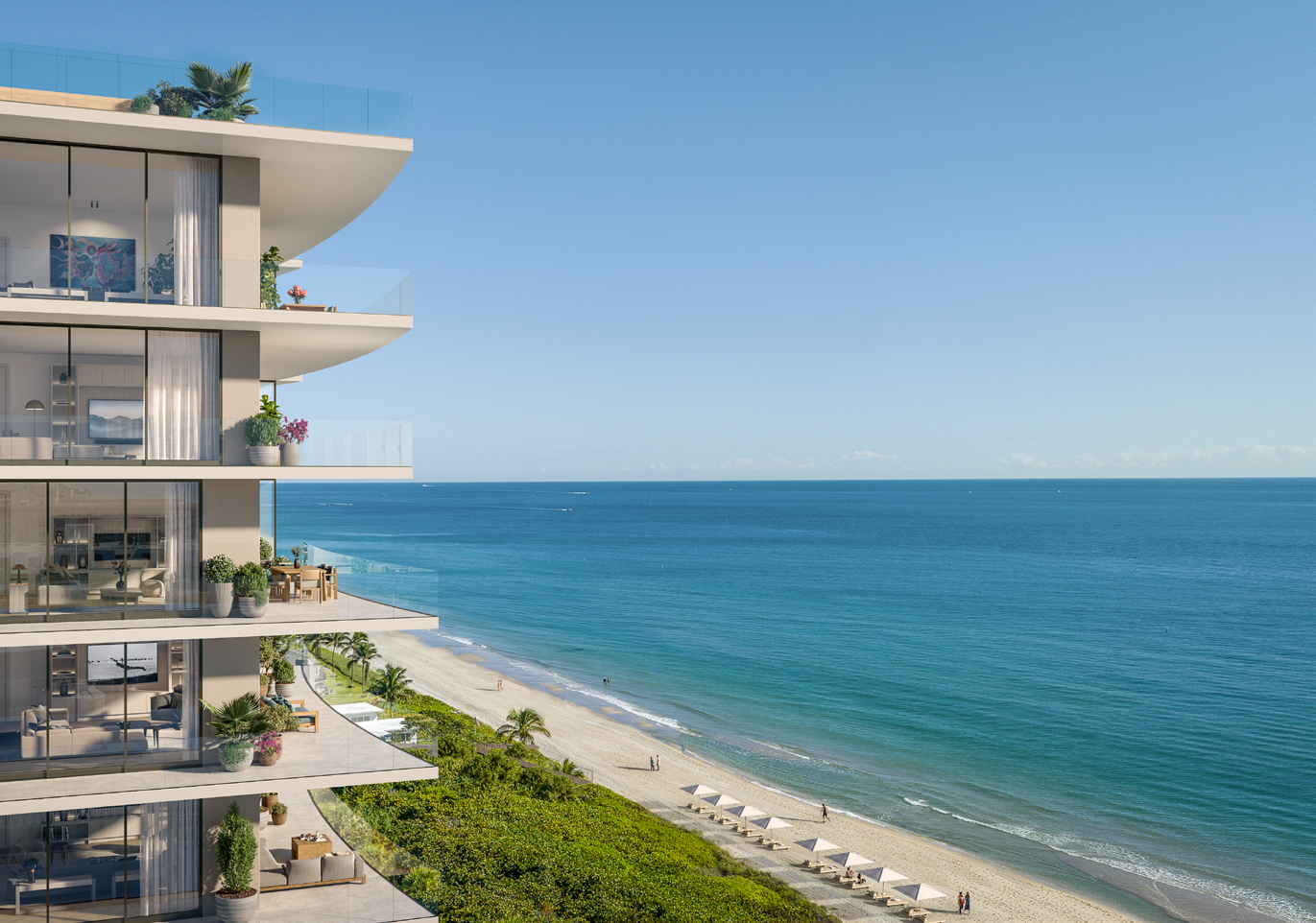
The design concept: two rotated "tower" volumes oriented to maximize Atlantic Ocean views from every residence. This isn't just a marketing line — it's a fundamental architectural decision that increases the percentage of premium-view units in the building dramatically compared to a conventional rectangular footprint.
Pricing and Unit Specifications
Here's the data:
- Price Range: $26.9M – $37M
- Average Price Per Square Foot: $5,582
- Unit Size Range: 2,100 sq ft to 6,700 sq ft
- Monthly Association Fees: $12,530 – $12,695
- Building Type: Condominium
Three observations:
1. $5,582/sqft is genuinely trophy pricing. For context, this is in the same range as Faena Residences and approaching the Surf Club. Cipriani Residences Brickell trades at $2,003/sqft. Bentley Residences Sunny Isles at $2,491/sqft. The Perigon is in a different price tier — a much smaller buyer pool, a much more concentrated international buyer base.
2. The $26.9M floor is meaningful. This is not a building for entry-luxury buyers. The smallest residence is more expensive than most penthouses in Brickell. It's deliberately positioned as a trophy oceanfront play.
3. The HOA at $12,530–$12,695/month reflects the level of service and amenity expected at this tier. That's $150K+ annually on association fees alone — a meaningful carrying cost that needs to be factored honestly into investment math.
The Architectural Story Matters
Here's something I've learned watching the Miami trophy market for over a decade: at the very top end, design pedigree drives appreciation more reliably than amenity packages.
Why? Because amenities depreciate as styles change. Architecture doesn't, when it's done well.
The Perigon is the first residential tower in Miami designed by OMA. That historical fact will not change. Twenty years from now, this will still be "the Koolhaas building" — the only one in the city. That kind of singular architectural provenance functions like a collectible-grade attribute, similar to how a Mies van der Rohe building or a Saarinen design commands a premium that doesn't decay over time.
For the buyer thinking about long-term capital preservation rather than rental yield, this matters more than concierge service.
The Amenity Package
OMA's architectural concept is matched by a serious amenity program:
- Signature oceanfront restaurant exclusively for residents (not open to the public)
- Beachside swimming pool and outdoor spa with cabanas
- Direct beach access with lounge chairs and full attendant service
- Conservatory with daily breakfast service
- Dedicated beach with attendants
The "resident-only restaurant" detail is critical. Most branded condos have a restaurant on the ground floor open to the public — a marketing draw, often inconvenient for residents who want privacy. The Perigon's restaurant is for residents only. This is a meaningful design decision that changes daily life in the building.
The Investor Math: 10/10/10/10 Deposit Structure
Buyers make deposits in four stages of 10% each:
- 10% at reservation
- 10% at contract
- 10% at 180 days from groundbreaking
- 10% at rooftop completion
Total deposit through construction: 40%
Remaining at closing: 60%
For a $26.9M entry-tier residence, the math:
- $2.69M at reservation
- $2.69M at contract
- $2.69M at 180 days from groundbreaking
- $2.69M at rooftop
- $16.14M at closing (typically a mix of financing and cash)
The 10/10/10/10 structure is buyer-friendly for capital management — you're never putting down a large lump sum at any single milestone, which preserves liquidity for parallel investment positions or business operations.
For the business owner clients I work with at this tier, the capital efficiency matters. Spreading $11M in deposits across multiple years means your invested capital keeps producing returns elsewhere during the construction cycle. As I explained in "The Miami Business Owner's Real Estate Tax Playbook: 5 Strategies to Keep More of What You Earn," efficient capital deployment is often the difference between a good investment and a great one.
Miami Market Snapshot — May 2026:
- Mandarin Oriental Residences penthouses: $49.9M each (March 2026, mainland record)
- Mid-Beach oceanfront trophy condo pricing: trending $4,500–$6,500/sqft for branded/signature product
- The Perigon average pricing: $5,582/sqft (squarely in trophy oceanfront segment)
- U.S. median sale price (March 2026): $436,733 (+1.21% YoY)
Who This Building Is Right For
The Perigon buyer profile in my experience:
- The collector-class ultra-high-net-worth buyer who already owns trophy real estate elsewhere
- The design-literate buyer who values architectural pedigree over amenity check-lists
- The international buyer seeking a U.S. oceanfront base with privacy and architectural significance
- The 1031 exchange buyer moving large gains from commercial property into a passive trophy hold
- The multi-generational family establishing a legacy asset
Who it's not right for:
- Buyers prioritizing investment yield or rental income (this is a hold, not a flip)
- First-time luxury buyers (start with $2M–$5M product, build into trophy tier)
- Anyone uncomfortable with $150K+ annual HOA carrying costs
- Buyers who want walkability to financial-district office space (this is oceanfront Mid-Beach, not Brickell)
I covered the broader Mid-Beach thesis briefly in my recent neighborhood comparisons, and it's worth understanding the cultural geography before committing to oceanfront over bay-side. Mid-Beach is intentionally quieter, more residential, and more design-oriented than South Beach or Sunny Isles.
The Catch — Or What I Stress Test
Three things I always raise with buyers seriously considering The Perigon:
1. The narrow buyer pool. Trophy oceanfront at $26M–$37M transacts in a much smaller market than $2M–$5M product. Resale liquidity is real but slow — plan for 12–24 month hold-to-sale timelines if you ever need to exit.
2. Hurricane exposure and insurance economics. Oceanfront Mid-Beach is barrier island. New construction with modern engineering is highly resilient, but premium insurance is meaningful. Get a quote before assuming the carrying cost.
3. The architectural specificity. OMA-designed buildings are not for every buyer. The aesthetic is intellectual, sometimes austere, occasionally polarizing. If you walk through and the design doesn't move you, this isn't the building for you — there are easier oceanfront trophy options at similar price points that will feel more conventional. Buy the architecture or buy somewhere else.
View the full Perigon Miami Beach project page with current pricing and availability at carloscabalerealtor.com/new-development/the-perigon
Frequently Asked Questions
Q: Who designed The Perigon Miami Beach?
A: The Perigon was designed by OMA (Office of Metropolitan Architecture), the firm founded by Pritzker Prize laureate Rem Koolhaas. Interior design is by Tara Bernerd & Partners. The Perigon is OMA's first residential tower in Miami — a singular architectural provenance that drives long-term value.
Q: How much does a residence at The Perigon cost?
A: Residences at The Perigon range from $26.9M to $37M, with units sized from 2,100 sq ft to 6,700 sq ft. Average price per square foot is approximately $5,582 — firmly in trophy oceanfront territory. Monthly HOA fees range from $12,530 to $12,695.
Q: What is the deposit structure for The Perigon Miami Beach?
A: The deposit structure is 10/10/10/10 — 10% at reservation, 10% at contract, 10% at 180 days from groundbreaking, and 10% at rooftop completion. The remaining 60% is due at closing. This four-stage 40% deposit structure is buyer-friendly for capital management at the trophy tier.
Q: Is The Perigon a good investment compared to other Miami branded condos?
A: For long-term capital preservation and architectural-asset appreciation, yes. For rental yield or short-term flip strategies, no. The Perigon is a trophy hold positioned for design-literate ultra-high-net-worth buyers, comparable to Faena Residences and the Surf Club — not a cash-flow play.
Explore the full Perigon Miami Beach project on my website: carloscabalerealtor.com/new-development/the-perigon
Let's find your next property together.