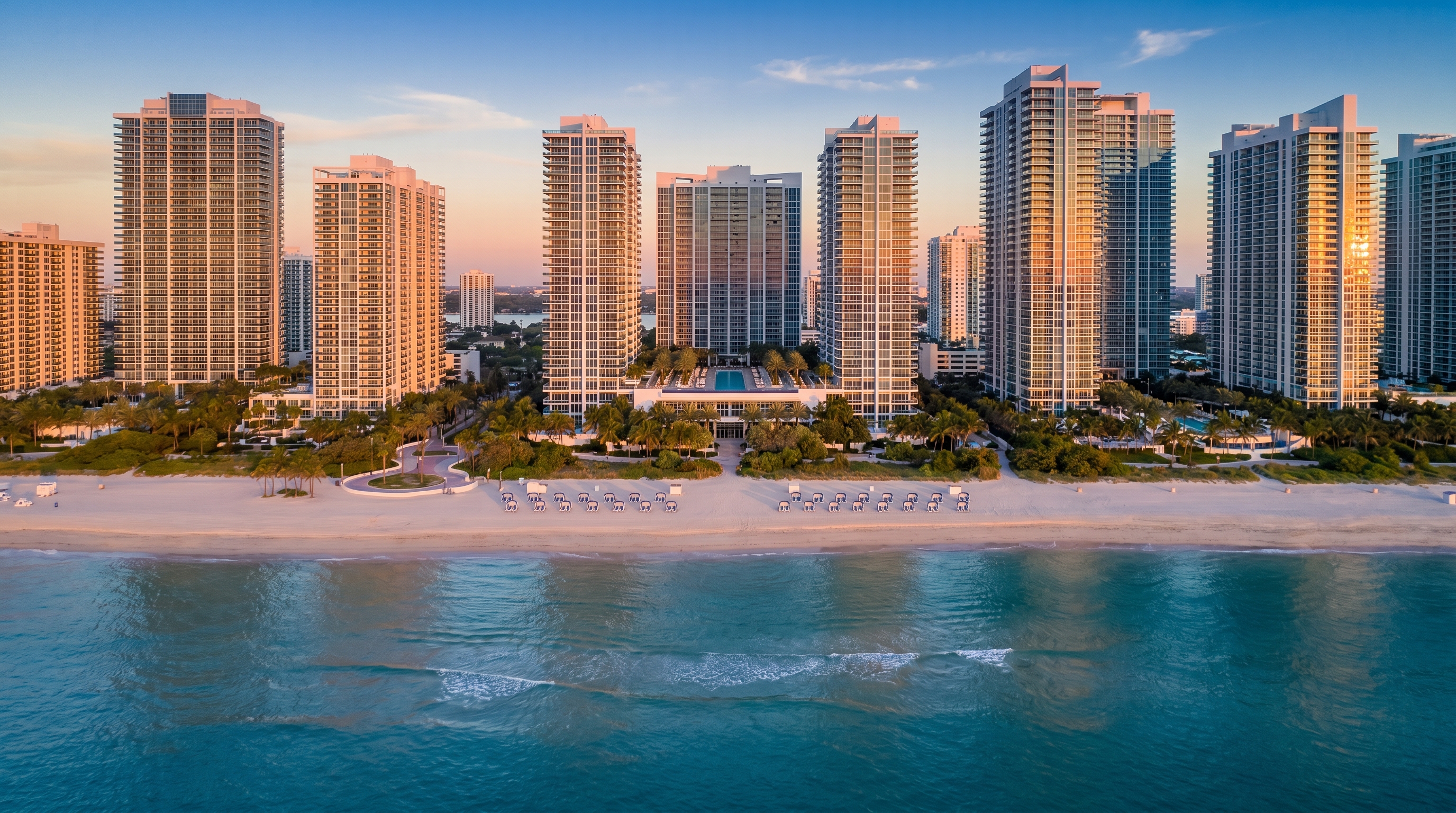

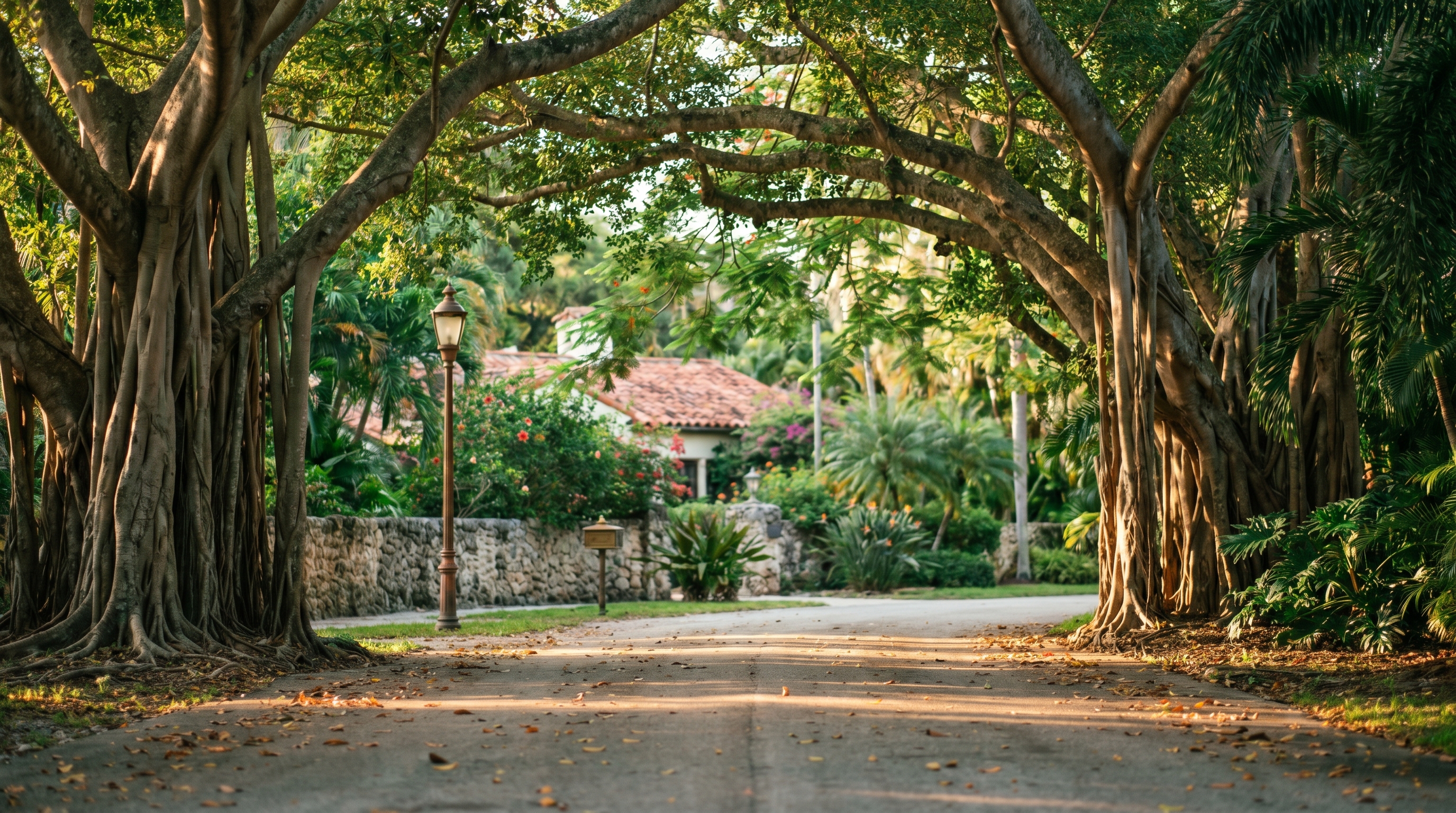
If you've lived in Miami for more than ten minutes, you already know the city has a personality problem. Brickell is the financial canyon. Wynwood is the art party. Sunny Isles is the wall of glass. South Beach is the postcard. Each one is loud about what it is.
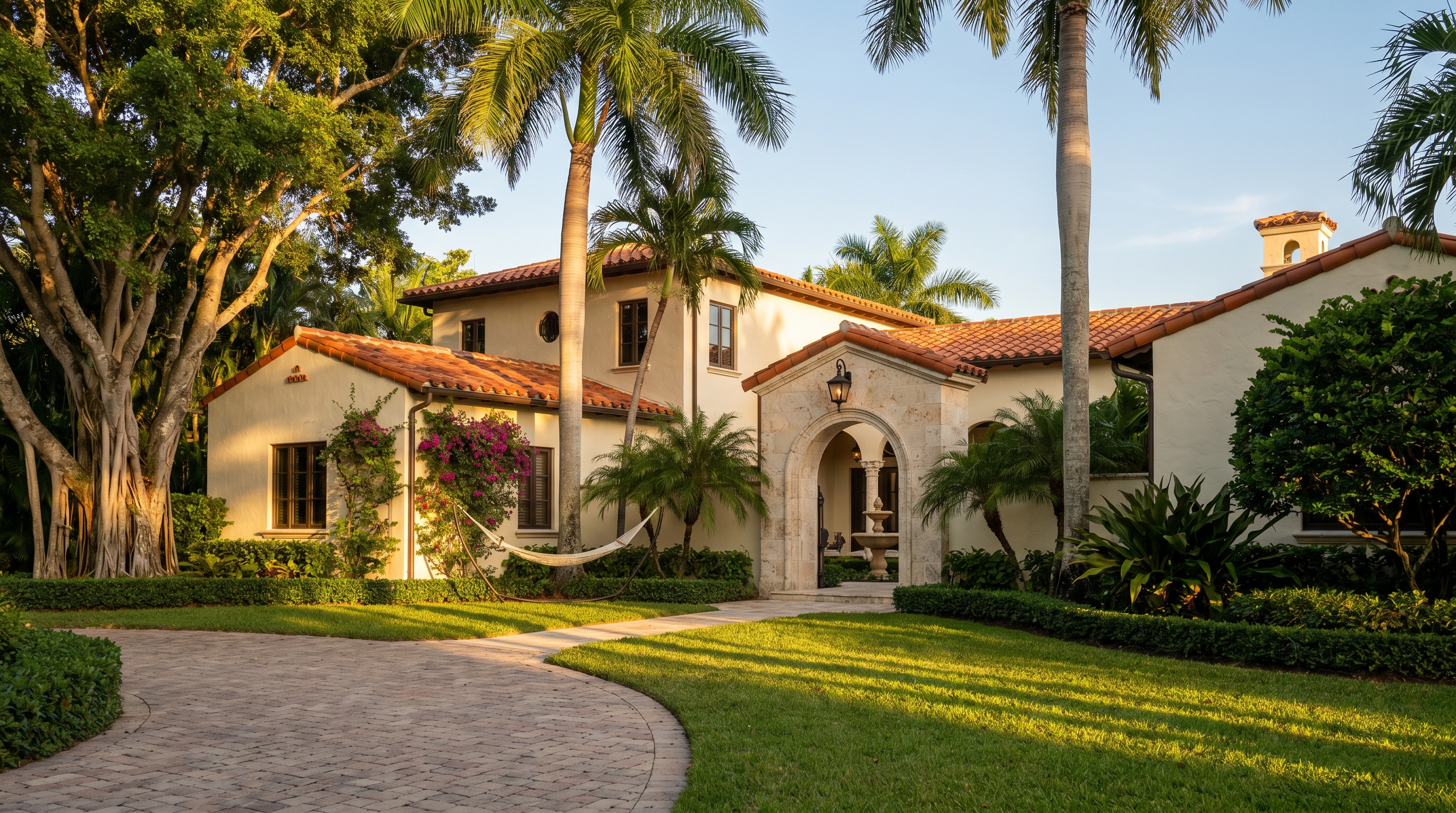
Coconut Grove is the opposite. It doesn't shout. It whispers under a 100-year-old banyan tree.
I work this neighborhood almost weekly — showings on Bayshore, listings on Tigertail, harbor-view tours on Pan American Drive — and the question I get most from out-of-state buyers is the same: "Why does this feel different?" The answer is in the trees, the water, the sidewalks that actually exist, and a school zone most Miami families would buy a smaller house just to access. As I covered in my article "Brickell vs Edgewater: The Honest Guide," each Miami neighborhood comes with a clear tradeoff. The Grove's tradeoff is the easiest to explain: you give up the flash, you get the life.
Here's the real guide. Not the tourism board version.
What Coconut Grove Actually Is
The Grove is Miami's oldest continuously inhabited neighborhood. It was its own city until 1925, and it still acts like one. The footprint is small — roughly 3.5 square miles — bounded by Biscayne Bay to the south, US-1 to the north, the Rickenbacker to the east, and Coral Gables to the west. Inside that footprint you'll find:
- Coconut Grove Village West and Center Grove (walkable, restaurants, CocoWalk, Regions Park)
- North Grove (single-family homes, Bayshore Drive's mansion belt)
- South Grove (large estate lots, deep tree canopy, the most expensive zip code in the neighborhood)
If you've ever walked CocoWalk on a Saturday and thought "this feels like a small coastal town," that's because it kind of is. The Grove has a Sunday farmers market, a Bayfront art festival every February that draws 120,000 people, and a marina where business owners actually keep their boats — not as a status accessory, but as the thing they use Saturday mornings.
The Numbers — May 2026
Let me ground this in actual data, because lifestyle articles without numbers are useless.
Miami Market Snapshot — May 2026:
- Median sale price in Coconut Grove (single-family): $1.85M, up 6.3% YoY
- Median condo price in The Grove: $755,000, up 2.1% YoY
- Median sale price across Miami-Dade: $578,000, up 1.21% YoY (Redfin national comp: $436,733)
- Active inventory in Coconut Grove: 178 single-family + 240 condo units, down 4% from April
- Average days on market: 51 days for SFH, 78 days for condos
- Penthouses at The Residences at Mandarin Oriental on the mainland just sold at $49.9M each — a pricing record that has rippled into Grove luxury comps
What the data is telling you: The Grove is still appreciating faster than the overall Miami-Dade market, but the pace is more rational than what we saw in 2022. This is a healthy market, not a frenzy. For a buyer that means you have time to actually choose. For a seller that means you cannot price like it's 2022 — you need to price like it's May 2026.
The Schools Question (The Real Reason Many Families Move Here)
The Grove sits inside one of Miami-Dade County Public Schools' most desirable elementary zones: Coconut Grove Elementary (Bayshore corridor) and George Washington Carver Elementary in the village. From there, kids typically feed into Ponce de Leon Middle and Coral Gables Senior High — both A-rated.
If you're a business owner relocating from New York, Chicago, or San Francisco and the public school math has been killing you, this is one of the very few Miami zip codes where you can buy a $1.5M-$2.5M home, send your kids to an A-rated public school, and still walk to a Saturday farmers market. That's not a small thing.
For private school families, Ransom Everglades, Carrollton, and St. Stephen's are all inside or right at the edge of the neighborhood. You're not driving 30 minutes for pickup.
The Lifestyle Lock-In: Boats, Bikes, Banyans
Three things every Grove resident I work with talks about within the first ten minutes of meeting:
1. Dinner Key Marina. 582 wet slips. If you own a boat under 60 feet, this is where you keep it. Wait list exists but moves. The boat-to-house ratio is what makes The Grove different from any other Miami neighborhood.
2. The Underline and the M-Path. You can bike from your house to Brickell in 20 minutes without touching a car. Try that in Doral.
3. The canopy. Hurricane code keeps the Grove's mature tree cover protected. Drive down Tigertail or Kumquat and the streetscape feels closer to Charleston than to most of Miami.
What's New: Inventory You Should Actually Look At
The Grove has been quietly absorbing new luxury inventory. The standout deliveries:
- Arbor (Coconut Grove) — 45 bespoke residences by Ark Capital Group, 1,466–2,010 sq ft, priced from $1.7M. The project received its temporary certificate of occupancy in March 2026 and is over 70% pre-sold. First residents moving in this quarter.
- Vita at Grove Isle — Larger floorplans, waterfront, deeper pricing.
- Grove at Grand Bay — Bjarke Ingels' twin towers, resale only.
- Park Grove — Resale market, OMA-designed, deep lot.
If you're new to pre-construction, start with my breakdown of "Mercedes-Benz Places Brickell: What the Luxury Auto Brand's First Miami Tower Means for Investors" before reading further — many of the same investment-grade dynamics apply to Grove pre-construction.
The Honest Tradeoffs
I'm not selling you the Grove without telling you what you give up.
You give up walking-distance to a Whole Foods or a 24/7 grocery — you'll drive to Coral Gables or use Instacart. You give up the easy 5-minute Uber to a 35-floor rooftop bar — the Grove's nightlife caps at 10pm on a weekday. And you give up some of the appreciation velocity that Brickell, Edgewater, and pre-construction projects pull in years like 2024-2025. The Grove appreciates steadily, not spectacularly.
For most of my business-owner clients, that's exactly what they want — a primary residence that holds value while their commercial property does the heavy lifting on the wealth-building side.
Frequently Asked Questions
Q: What is the best area of Coconut Grove to live in for families with kids?
A: The South Grove (south of Bird Avenue, west of Main Highway) is the family belt — bigger lots, the strongest tree canopy, and the closest zoning to Coconut Grove Elementary. North Grove is more compact and walkable; Center Grove is best if you want to be near restaurants and CocoWalk.
Q: How much does it cost to buy a home in Coconut Grove in 2026?
A: As of May 2026, median single-family price is $1.85M and median condo is $755,000. Waterfront and South Grove estates regularly trade above $4M-$10M. Entry-level Grove townhouses start around $850K.
Q: Is Coconut Grove a good investment compared to Brickell or Edgewater?
A: For pure investment velocity, Brickell and Edgewater pre-construction outperform. For long-term wealth preservation, school-zone scarcity, and primary-residence quality of life, the Grove is the stronger play. Most of my clients buy the Grove for living and Brickell or Edgewater for investing.
Q: What's the commute from Coconut Grove to Brickell or downtown?
A: 12-18 minutes by car off-peak, 25-30 in rush hour. Brightline is not in the Grove, but Metrorail's Coconut Grove station puts you in downtown in 14 minutes. Many of my business-owner clients ride the M-Path bike trail and skip the car entirely.
Ready to See Coconut Grove Through Local Eyes?
If you're moving to Miami and the Grove is on your list — or it isn't yet but should be — let's walk it together. I'll show you the streets, the schools, the marina, and the listings that haven't hit Zillow yet. Whether you're buying, selling, or investing — I've got you.