EN
EN
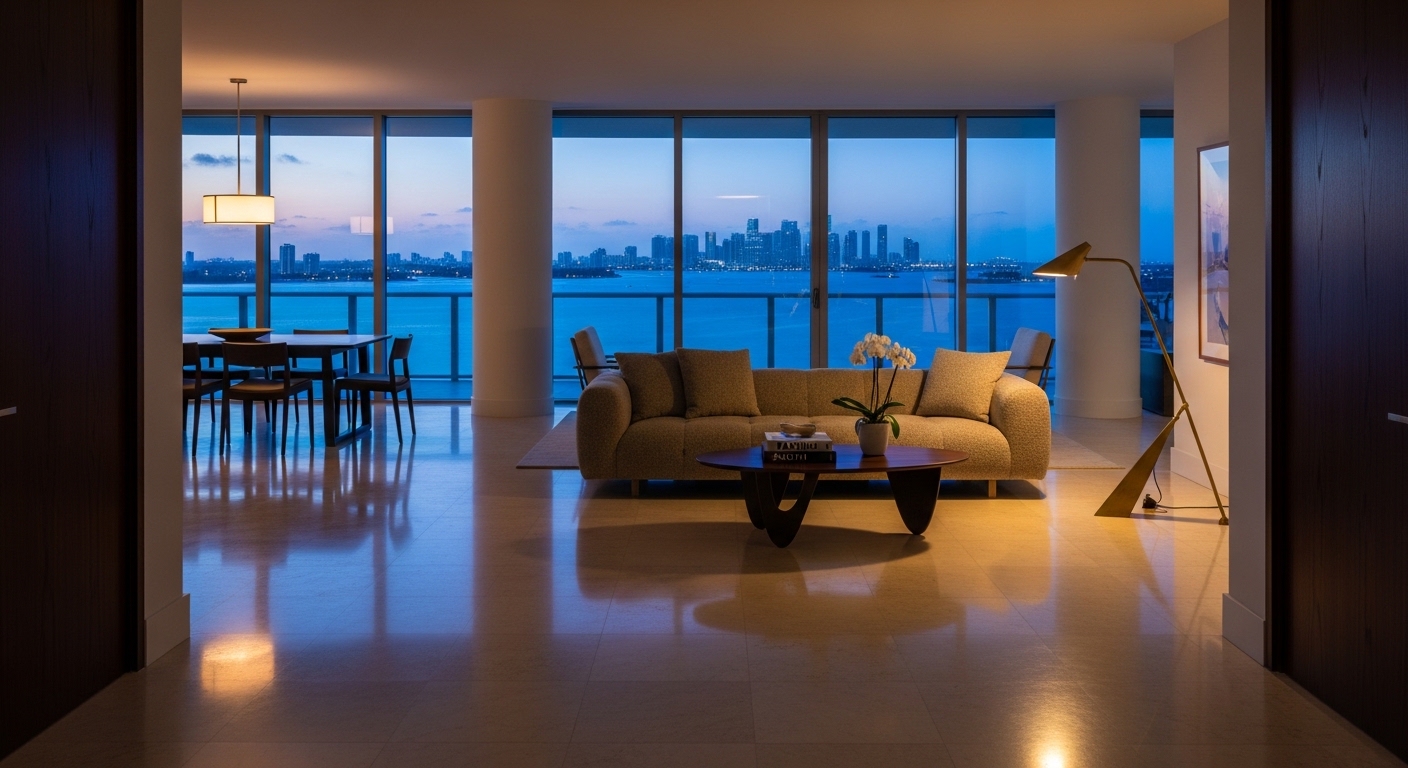
If you own a property in Miami and you are thinking about selling in 2026, you are sitting on something that the rest of the country quietly envies. In most American cities, the buyer pool is mostly local. In Miami, almost a quarter of all condo closings last year went to a foreign buyer, and many of those buyers wired the full purchase price before they ever set foot in the unit.
That changes everything about how you should be selling.
Most sellers in Miami still list their property the way you would in Atlanta or Nashville. Local MLS, a few professional photos, a generic description, and a price set against what your neighbor sold for last quarter. That works fine if you are happy with the local price. But there is a parallel market in Miami that pays more, closes cleaner, and asks for fewer concessions, and you have to actively design your listing to reach it.
This is the playbook I run with clients who want to sell into that international buyer pool in 2026. It is not theoretical. It is what is closing in my pipeline this spring.
Why International Buyers Pay More in Miami
There are three real reasons the international buyer in Miami consistently outbids the local buyer in the same price band.
First, currency. When the Argentine peso, the Colombian peso, or the Brazilian real moves against the dollar, an international buyer often locks in real estate as a hedge. They are not just buying a condo. They are converting volatile local currency into a stable dollar-denominated asset they can also live in. That motivation makes them less price-sensitive than a local buyer comparing your condo to two other listings on the same street.
Second, the alternative. A wealthy Argentinian family is not choosing between your condo and a single-family home in Doral. They are choosing between Miami and Madrid, Miami and Lisbon, Miami and Punta del Este. Once Miami wins that choice, the price difference between $1.8M and $2.0M for your specific unit is a rounding error in the lifestyle decision.
Third, residency motivation. Several of the most active source countries in 2026 (Argentina, Colombia, Venezuela) are not sending tourists. They are sending capital and, increasingly, families. EB-5, E-2, and family residency planning all run through real estate. When someone is making a multi-generational decision, they do not nickel-and-dime on $20,000.
Miami Market Snapshot — May 2026:
- Median condo sale price in Edgewater: $748,000 (up 3.1% YoY)
- Active condo inventory countywide: 23,400 units (13 months of supply, multi-year high)
- Average days on market for condos: 78 days
- International buyer share of Miami-Dade condo closings (2025): 23%, with Argentina, Colombia, and Brazil leading
The Two-Tier Pricing Reality
Here is the part nobody tells sellers honestly. The same Miami condo can have two prices: the local-buyer price and the international-buyer price. The gap is often 5% to 9%.
If your unit lists at $1.2M and your only marketing is the MLS, you will get local buyers who run comps from last month and chip away at the price with inspection items, financing contingencies, and concession requests. The same unit, marketed correctly to a São Paulo or Buenos Aires buyer, often closes at $1.25M to $1.30M with no contingencies and a 30-day cash close.
The seven steps below are how you systematically reach the second buyer.
Step 1: Translate Your Listing Properly (Not With Google Translate)
This sounds obvious. It is not. Most listings I see translated into Spanish read like a 2010 chatbot. Square feet stays as "square feet" instead of converting to square meters. "Den" becomes "guarida." "Open concept" becomes "concepto abierto" with no context. International buyers click off within seconds.
A professional translation by someone who actually works in Miami real estate (not just any translator) costs $300 to $500 per listing. The lift in international inquiries is usually 4x to 6x. It is the single highest-ROI marketing move you can make.
Step 2: Price in USD But Show the Equivalent
International buyers think in their home currency. When they see $1,500,000, they are doing math in pesos, reais, or euros in their head. A small line under the price showing "approximately R$8.4M" or "approximately 1.4M EUR" reduces friction. They do not need a hard conversion. They just need to know roughly where they are.
Step 3: Lead With What They Care About
Local buyers care about schools, commute, and HOA fees. International buyers care about a different set of things: short-term rental policy, parking for an Uber-heavy lifestyle, security and concierge, building reserves, proximity to MIA, and whether the building accepts foreign income for financing if they are not paying cash.
Restructure the listing description so the first three lines hit those points. Most sellers bury this information at the bottom.
Step 4: Video Tours Are Non-Negotiable
A Buenos Aires buyer is not flying in for a 20-minute showing. They want to see your unit on a Tuesday night on their phone, then again with their spouse on Saturday, then again with their accountant. A professional 3-minute walkthrough video plus a Matterport 3D scan costs $400 to $700 in Miami and is the bare minimum.
I have closed three deals in 2026 where the buyer never saw the unit in person before signing. The video was the showing.
Step 5: Get FIRPTA Right Before You List
If you are a foreign seller selling to anyone in the U.S., FIRPTA withholding applies. If you are a U.S. seller selling to a foreign buyer, FIRPTA does not apply to your sale, but title and escrow will still need to verify your status. The buyer's attorney will check.
Have your seller's affidavit and tax documentation ready before the listing goes live. International buyers move fast when they decide. The deals that fall apart in week three almost always fall apart because of paperwork the seller did not have ready.
Step 6: Negotiate in Their Style, Not Yours
This is the part most agents get wrong. Argentinian buyers tend to negotiate hard upfront, then close cleanly. Brazilian buyers expect a long courtship and several rounds before a final number. Colombian buyers often want a deeper relationship with the agent before they trust the price. Canadian buyers are the most transactional and the least emotional in the group.
If you treat all of them the same way, you will lose the deal or leave money on the table. As I covered in my article "Relocating to Miami from Latin America in 2026: The Real Estate and Residency Guide for International Buyers," cultural fluency on the closing side is now a measurable price lever.
Step 7: Close on Their Timeline, Not Yours
If a buyer is wiring funds from a foreign bank, build in a wire window. Brazilian wires take longer than Colombian wires. Argentinian buyers often need to consolidate funds through a third-country intermediary. Confirm the timeline at offer, not at closing.
Sellers who push for a 21-day close when the buyer is wiring from overseas frequently lose the deal in the last week. Sellers who allow 35 to 45 days, with a non-refundable deposit at day 10, close at the highest price.
The Mistake That Costs Sellers $50,000+
The single most expensive mistake I see Miami sellers make in 2026 is dismissing a lowball-looking offer from an international buyer in week one. That offer is almost always the opening of a negotiation, not the final number. Sellers who counter at full price and stop talking get nothing. Sellers who counter with a softer number and stay in the conversation often close $40,000 to $80,000 higher than the original ask three weeks later.
If you bought your Miami property in the last five years and you are thinking about selling, the international buyer is currently your best customer. If you are also a Miami business owner thinking about timing, my piece "Should Your Miami Business Buy Its Office or Keep Renting? The 2026 Honest Math" pairs well with the same wealth-preservation logic.
Frequently Asked Questions
Q: How long does it take to sell a Miami home to an international buyer in 2026?
A: From listing to closing, expect 60 to 90 days when you market correctly. The marketing phase is similar to a local sale. The closing phase often runs 10 to 14 days longer because of international wire timing and document apostille requirements. Cash deals close faster than financed deals every time.
Q: Do international buyers pay more than local buyers in Miami?
A: In many price bands, yes. International buyers typically pay 5% to 9% more than comparable local buyers because they value Miami against alternatives like Madrid or Lisbon, not against another Miami condo. They are also less likely to ask for concessions or repairs.
Q: What documents do I need before listing to international buyers?
A: Have your seller's affidavit, recent HOA statements, building reserve study, and rental history if applicable ready before the listing goes live. International buyer attorneys are thorough. Deals stall when sellers cannot produce documents in week three. Get organized in week zero.
Q: Should I list with a bilingual Miami real estate agent if I am selling?
A: If your buyer pool includes Latin America or Europe, yes. A bilingual best realtor Miami can directly market your property in Spanish or Portuguese, qualify international buyers faster, and negotiate cultural nuance that monolingual agents miss. The premium is in the closing price, not the commission.
Whether you are buying, selling, or investing — I've got you.
Carlos Cabale / Partnership Realty Inc / +1 (561) 629-0358 / carloscabalerealtor.com