

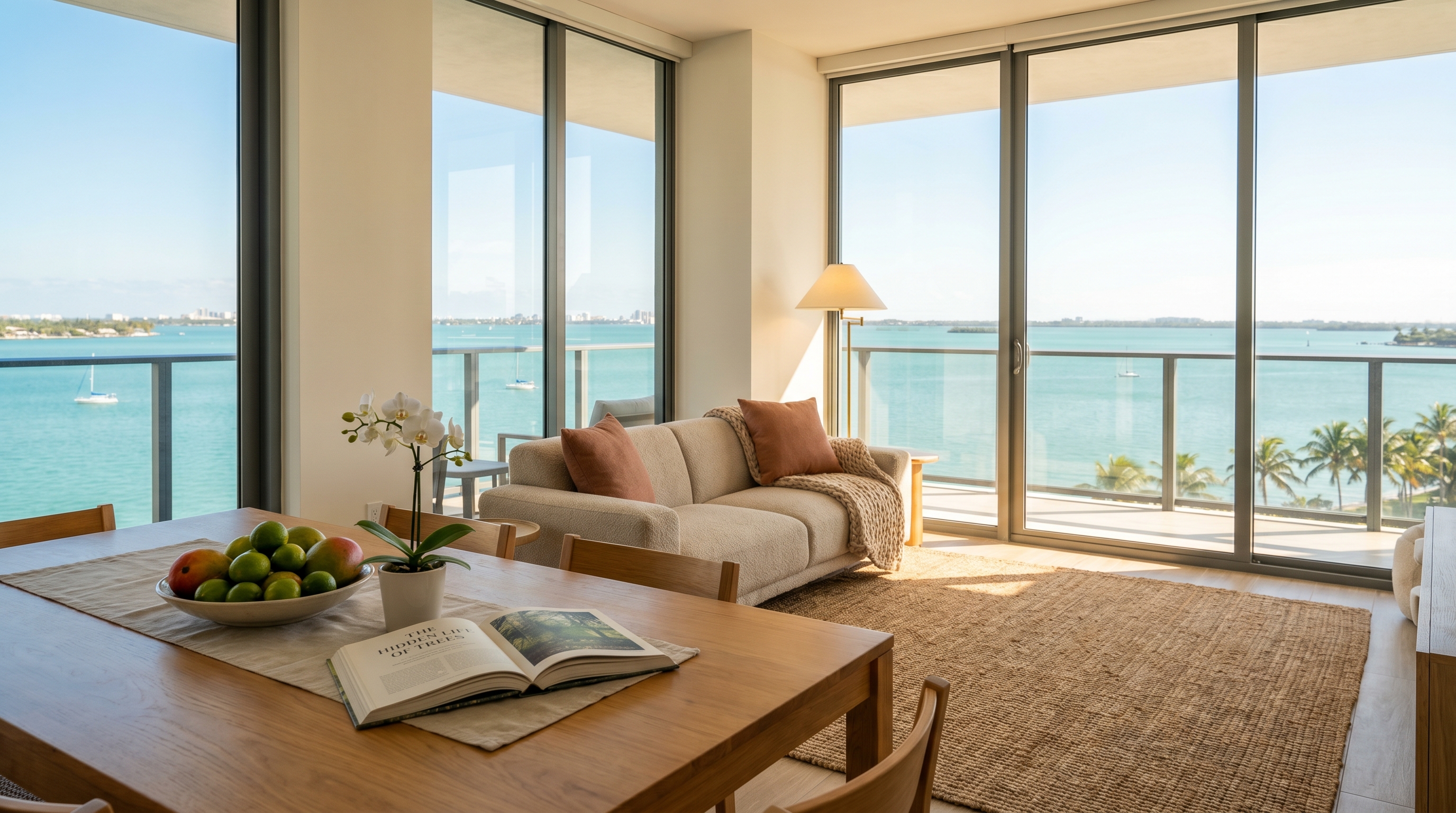
This is my honest Miami relocation guide for buyers coming from Latin America in 2026. No sales pitch — just the roadmap I walk every client through, written down.
Why Latin Americans Keep Choosing Miami
Miami is not a foreign city for most Latin American buyers; it is a second home before they ever own one. Spanish is spoken everywhere. Direct flights connect almost every major capital. The legal system protects property rights and the dollar protects savings — and for many families, that second point is the entire reason for the move.
The numbers confirm the pull. Miami's millionaire population has grown roughly 94% over the past decade, and a large share of that growth is international wealth seeking a stable home. Miami was also ranked the world's number one second-home destination in 2025. You are not making a contrarian bet by moving here. You are joining a very well-informed crowd.
Can You Get a Mortgage as a Foreign Buyer?
Yes — and this surprises most of my clients. You do not need US citizenship, a green card, or even a US credit score to finance a Miami home.
The product is called a foreign national loan. Several South Florida lenders specialize in them. You should expect to put down 25% to 35%, document your income and assets through your accountant and bank statements (translated and sometimes apostilled), and accept an interest rate slightly above what a US resident would get. The loan is real, it closes, and I work with lenders who do this every week.
Many Latin American buyers still choose to pay cash, both for negotiating power and simplicity. But know that financing is fully available. If you finance, you keep more capital free for the move itself, for furnishing, and for emergencies.
The Visa Question — Read This Carefully
This is the single most misunderstood part of relocating, so I will be direct. Buying real estate in Miami does not give you a visa or residency. There is no "buy a condo, get a green card" program in the United States. Anyone who tells you otherwise is not someone you should be doing business with.
What is true is that real estate fits naturally alongside the real immigration pathways. The E-2 investor visa, available to nationals of treaty countries, requires investing in an active US business — and many of my clients buy both a home and a business, then run that business from Miami. The EB-5 program grants residency through a qualifying investment that creates jobs, and some EB-5 projects are real estate developments.
The clean way to think about it: your immigration attorney handles your status, and I handle your home. The two plans run in parallel. As I explained in "Relocating to Miami from California in 2026: The Honest Cost-of-Living and Real Estate Guide," the move works best when each professional stays in their lane and the timelines are coordinated early.
Choosing the Right Neighborhood
Latin American families tend to cluster in a few areas, and for good reason — but the right choice depends on your stage of life.
Brickell is the default for professionals and younger families who want a walkable, urban, high-rise lifestyle with restaurants and offices downstairs. Edgewater offers similar energy with more bayfront calm; I compared the two in detail in "Brickell vs Edgewater: The Honest Guide to Picking the Right Miami Neighborhood in 2026." Coral Gables is the choice for families who want tree-lined streets, top schools, and a quieter, established feel. Aventura and Sunny Isles are enormously popular with buyers from across Latin America who want new luxury condos, malls, and a strong international community. Doral attracts families who want newer single-family homes and is heavily Venezuelan and Colombian.
There is no wrong answer. There is only the answer that matches how your family actually lives.
The Mistakes I See International Buyers Make
After a decade as a Miami real estate agent, I see the same avoidable errors.
The first is buying remotely without ever walking the neighborhood at different times of day. A condo that looks perfect online can sit above a noisy bar or face a construction site. The second is ignoring the full carrying cost — Florida has no state income tax, but condo association fees, property taxes, and hurricane insurance are real and must be in your budget. The third is skipping the building's financial health check; I wrote an entire guide on this called "How to Read a Miami Condo Building's Financials Before You Buy" and I tell every international client to read it before signing.
The fourth mistake is the most expensive: not having a Miami real estate agent who actually represents you. In Florida, your buyer's agent is typically paid through the transaction, and having a professional purely on your side — explaining contracts, inspections, and Florida-specific rules — costs you nothing extra and protects you completely.
Why 2026 Is a Strong Year to Buy
For years, Miami was a seller's market with almost no room to negotiate. That has shifted. Condo inventory across Miami-Dade is at a multi-year high, which means buyers — including international buyers — finally have leverage. You can negotiate price, closing costs, and timing in a way that was impossible just two years ago.
That window does not stay open forever. With strong continued demand from exactly the buyers reading this, today's balanced conditions are a gift, not a permanent feature.
Miami Market Snapshot — May 2026:
- Miami was ranked the world's #1 second-home destination in 2025, with Latin American buyers a leading source of demand.
- Miami-Dade condo inventory sits at a multi-year high, shifting negotiating power toward buyers.
- National pending home sales rose 10% year-over-year, the highest level since 2022 (Redfin).
- Florida levies no state income tax — a structural advantage that compounds for relocating families and business owners.
Frequently Asked Questions
Q: Can I buy a home in Miami as a foreigner without US residency?
A: Yes. There is no citizenship or residency requirement to buy property in Miami. Foreign nationals buy homes and condos here every day. You will need a valid passport, funds, and ideally a US bank account, and a buyer's agent can guide the entire process remotely if needed.
Q: Does buying real estate in Miami give me a visa?
A: No. Purchasing property does not grant a visa or US residency on its own. Residency comes through immigration programs like the E-2 investor visa or EB-5. Real estate often complements those strategies, but you need an immigration attorney to handle your actual status.
Q: How much down payment do international buyers need in Miami?
A: Foreign national loans typically require 25% to 35% down. You document income and assets through bank statements and your accountant rather than a US credit score. Many Latin American buyers also pay cash for stronger negotiating power, but financing is fully available.
Q: Which Miami neighborhoods are best for Latin American families?
A: Brickell and Edgewater suit urban professionals, Coral Gables and Pinecrest attract families wanting top schools, and Aventura, Sunny Isles, and Doral have large, established Latin American communities with newer housing. The right choice depends on whether you prioritize walkability, schools, or community.
Whether you're buying, selling, or investing — I've got you. If your family is planning a move to Miami from anywhere in Latin America, call me and let's build the plan together, in your language.